- Para proveedores
-
Particulares y familia
- Soluciones para particulares
- Particulares residentes en España
Empresas
- Soluciones para pymes
- Soluciones para grandes empresas
- Empresas en España
OIG/ONG
- Soluciones para OIG/ONG
Particulares y familia
Destinos principales con nuestra cobertura
Seguro de salud para expatriados
- Dentro de Expat Health Hub
- Guía para seguro de salud internacional para jubilados
- Guía para seguro de salud internacional para trabajar en el extranjero
- Información sobre el seguro de salud para expatriados
- Guía para seguro de salud internacional para estudiantes
- Trasladarse al extranjero estando embarazada
Elegir un seguro de salud
- Seguro de viaje frente a Seguro de salud internacional
- Elegir un seguro de salud
Guías de países
- Guías de países
Preguntas frecuentes
- Preguntas frecuentes
Empresas
Prestaciones de salud globales Europa
- Planes de salud para empresas
- Plan de Cigna Inspire
2 - 149 Empleados
- Planes de salud internacionales
Grandes empresas
- Planes de salud para empresas
Recursos para asegurados
- Documentación e información
- Lista de fármacos con prescripción de los EE. UU.
Cliente
- Área de empresas
OIG/ONG y Gobiernos
Funcionarios públicos
- Funcionarios públicos
Recursos para asegurados
- Preguntas frecuentes
- Cigna Health Benefits App
- Información del producto del seguro
Cliente
- Área de empresas
Temas
Particulares y familia
-
Tipos de cobertura
-
Dónde tenemos cobertura
-
Recursos
- Dentro de Expat Health Hub
- Guía para seguro de salud internacional para jubilados
- Guía para seguro de salud internacional para trabajar en el extranjero
- Información sobre el seguro de salud para expatriados
- Guía para seguro de salud internacional para estudiantes
- Trasladarse al extranjero estando embarazada
- Seguro de viaje frente a Seguro de salud internacional
- Elegir un seguro de salud
- Guías de países
- Preguntas frecuentes
-
Para asegurados
Empresas
OIG/ONG y Gobiernos
Blog
Para corredores de seguros
Work-life balance: Addressing the issue of burnout
Work-life balance: Addressing the issue of burnout
Dr. Lior Baruch is a Senior Medical Executive for Cigna in North America.
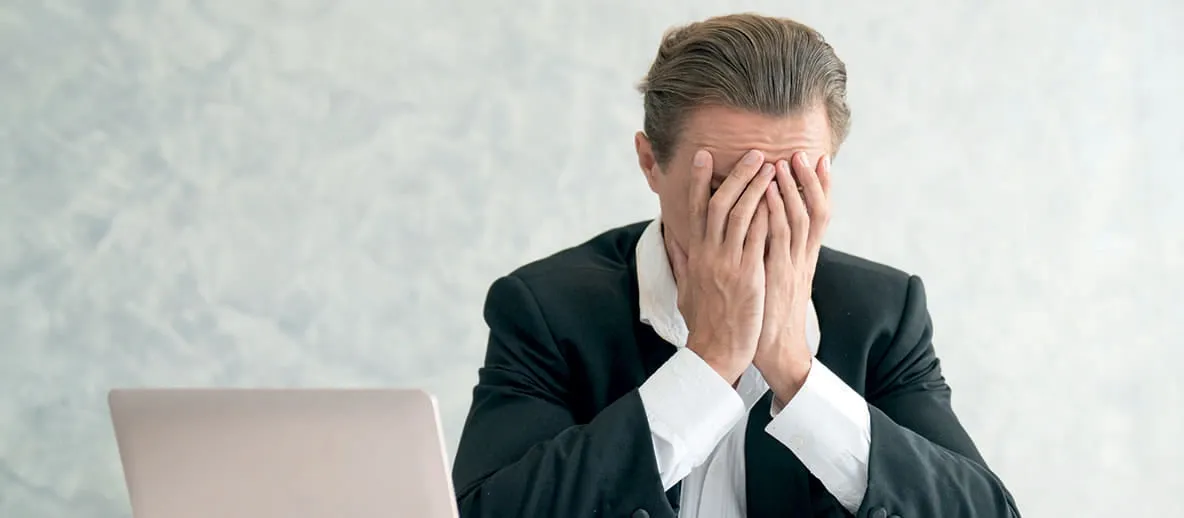
In May 2019, burnout was included in the 11th revision of the International Classification of Diseases to refer to an occupational phenomenon characterised by lack of motivation, energy, satisfaction, and efficacy in the workplace. [1][2]
Other symptoms of burnout include altered sleep habits, fatigue, irritability, sadness, and stress. When left unaddressed, burnout can lead to serious medical issues, including high blood pressure, type 2 diabetes, heart disease, and a vulnerability to illness. [2]
Measures are taken to screen for, detect, diagnose, and treat numerous physical and mental conditions that can be detrimental to a person’s health. At a recent Wellbeing Insights Forum, Dr. Lior Baruch asked why burnout is any different. “When we have awareness days about diabetes, healthcare professionals bring glucometers to check glucose levels and give out information about diabetes. People may find themselves diagnosed with diabetes, and offered support in addressing it – they leave with an action plan.”
“When we talk about burnout, we need to ask, is there a way to recognise it at an earlier stage? As the word itself says, it’s a burn. So before you get burnt, you need something to be heating up; you need that source. Could organisations create awareness ahead of time?”
Burnout is often a result of feeling discontent at work. Recognised causes include a feeling of lack of control, both in making decisions and knowing what is expected; dysfunctional workplace dynamics; and a widely varying level of activity. Isolation, lack of social support, and an overall work-life imbalance can also play a part.[2]
“When we talk about burnout, we need to ask, is there way to recognise it at an earlier stage?”
When it comes to preventing and overcoming burnout, experts advise, among other measures, self-care, exercise, mindfulness techniques, and technological abstention. It is widely recognised that technological advancements and working from home policies have facilitated constant connection, which can be detrimental when it comes to achieving work-life balance and avoiding burnout. [2] [3]
Dr. Baruch made a compelling argument for an awareness of others and their personal work-life balance, in reference to the continuous connectivity of the modern working world. “We have to level set expectations. If you’re about to send an email at 1am, it had better be extremely important or urgent since it may require the receiver’s immediate action. Otherwise, be respectful of one’s time, as they will be of yours. We have to draw a line out of respect, to say no, I’m not going to bother you at 1am if it’s not important.”
“We do, however, work in a global environment, and we definitely have to understand and collaborate across multiple time zones,” Dr. Baruch continued. “Yet drawing attention to something that shouldn’t be getting laser focused – as it’s not extremely urgent – can lead up to things piling up chronically, and create frustration.”
Dr. Baruch also mentioned the part that companies themselves can play in fomenting work-life balance and preventing burnout. “We all have to work hard and exceed our goals; but there’s more to it than that. A healthy, pleasant, collaborative, forward-thinking work environment can meet the basic needs for happiness.”
“We have read about companies trialling a four-day week and a three-day weekend. Having to work specific hours, a certain amount a week, and sitting there and not adding any value, that’s not going to help – it’s the so-called presenteeism, often associated with unwell people in the office not producing, because they simply physically can’t, when they should be recovering at home. Maybe you can produce more late at night than during the day, if that’s when your mind is working at 200 miles an hour. Maybe it doesn’t matter if you’re going to work four days or two days or one day, as long as you deliver the results and exceed your goals; that’s the individual’s balance, and can work as a motivator.”
“A healthy, pleasant, collaborative, forward-thinking work environment can meet the basic needs for happiness”
Perhaps, he said, along with facilitating flexibility, and both setting and meeting awareness and expectations, companies should consider implementing programmes and initiatives designed to support sustainable work-life balance and foment healthy attitudes and outlooks.
“Mentorship schemes that give employees the opportunity to work with someone who can see things from a different perspective can certainly help,” said Dr. Baruch. “A mentor plays a key role in developing one’s subset of skills.”
“And why not give employees a mental health day? Just one day a year. Then ask them how they felt about it, ask if it raised awareness that their life isn’t just about work. If someone has time off and enjoys it, perhaps they can start to create their own work-life balance.” In doing so, organisations can take the lead in supporting employees and caring for their physical and mental health alike.
Fuentes:
- Burnout is an official medical diagnosis, World Health Organization says. CNN Health. https://www.cnn.com/2019/05/27/health/who-burnout-disease-trnd/index.html Accessed March 12, 2020.
- Job burnout: how to spot it and take action. Mayo Clinic. https://www.mayoclinic.org/healthy-lifestyle/adult-health/in-depth/burnout/art-20046642. Accessed March 11, 2020.
- Are you burned out? American Psychological Association. https://www.apa.org/monitor/2018/02/ce-corner. Accessed March 11, 2020.
Artículos relacionados
@Cigna 2025
This article serves only as a reference and is intended for informational purposes only. Nothing in this article constitutes legal, tax, financial planning, health or medical advice including diagnosis or treatment. Solicita siempre el consejo de tu médico o de otro proveedor de salud cualificado siempre que tengas alguna pregunta relacionada con una enfermedad. Any reference to products or services offered by Cigna are available except where prohibited by applicable law and subject to terms and conditions.
Contacta con nosotros
Tanto si quieres hablar con nuestro equipo comercial como si ya eres asegurado de Cigna y necesitas ayuda, estamos aquí para todo lo que necesites.
Información de contactoEnlaces populares
Recursos
© 2025 Cigna Healthcare. Todos los derechos reservados.
* Ten en cuenta que esto es una representación de las prestaciones disponibles y no contiene los términos, condiciones y exclusiones específicos de cada prestación. Las prestaciones pueden estar sujetas a cambios. Algunas prestaciones pueden formar parte de un módulo opcional. Consulta la Guía del cliente para obtener todos los detalles.
Este sitio web está proporcionado por Cigna European Services (UK) Limited, una compañía registrada en Inglaterra y Gales con domicilio social en 13th Floor, 5 Aldermanbury Square, Londres EC2V 7HR y número de registro 00199739. El nombre y el logotipo de Cigna Healthcare, así como otras marcas de Cigna Healthcare, son propiedad de Cigna Intellectual Property, Inc., con licencia de uso de The Cigna Group y sus filiales.
Al seleccionar estos enlaces, saldrás de Cignaglobal.com. Cigna Healthcare no controla el contenido ni los enlaces de los sitios enlazados.